Boxing Ring
- 4.6
- Rating
- 1.00M
- Installs
- Free
- Price

 Analysis by App-foxy
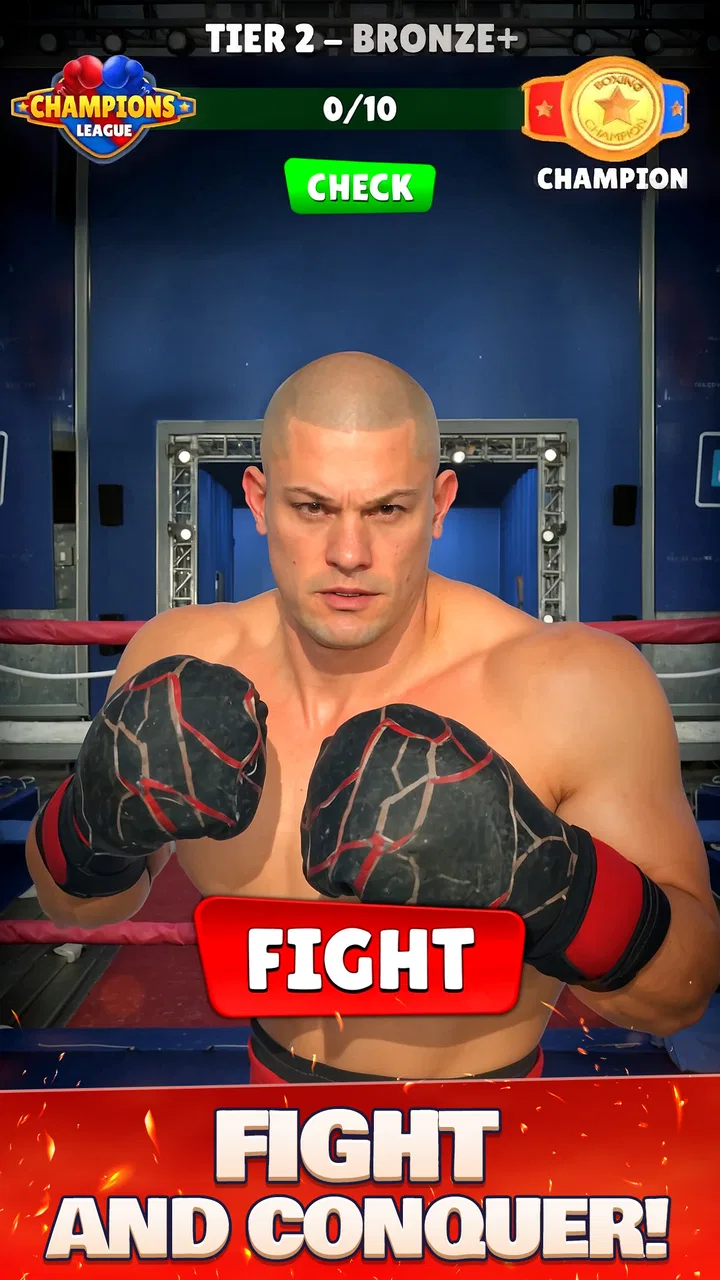
I spent time with Boxing Ring as a quick, competitive sports game, and my first impression was easy to understand: it wants every match to feel like a small step toward becoming better in the ring. Developed by BoomBit Games, this free game is aimed at players who enjoy short boxing sessions rather than a deep simulation built around complicated controls. Its store summary promises the feeling of chasing championship status, but the more useful question is whether the goals, unlocks, challenge, and pacing are strong enough to keep that chase interesting.
My answer is mostly positive, with an important qualification. Boxing Ring is at its best when I want something direct that I can pick up without preparing for a long session. It is less convincing for anyone looking for the strategic depth, detailed career management, or realism associated with larger boxing games. The appeal comes from its accessible ring action and the satisfaction of moving forward, while the main risk is that repeated matches may start to feel familiar if the progression does not keep offering a fresh reason to continue.
How the first goals shape the experience
The early part of Boxing Ring works because it gives the player a clear mental target: improve enough to keep winning and move closer to the top. I did not need to spend much time learning a complicated ruleset before understanding what the game wanted from me. That matters on a phone, where a sports title often competes with a few spare minutes rather than a dedicated evening.
You May Also Like

 Google Keep - Notes and lists
Google Keep’s Quiet Growth Shows the Appeal of Simpler Notes
As mobile work gets busier, Google Keep keeps winning a simple contest: capture a thought quickly, find it later, and get on with the day.

 Blood Strike: 2.5 Anniversary
Blood Strike’s Loadouts Turn Every Drop Into a Tactical Gamble
A close look at Blood Strike’s custom loadouts: how fast access to signature weapons reshapes its battle royale rhythm, rewards preparation, and narrows the gap between fights.

 Pandora - Music & Podcasts
Pandora’s Music Is Easy to Start, but Harder to Recover
Pandora’s strength is its low-effort path from a seed to a station. Its weak spot is how much confidence it asks you to place in connection, setup, and quiet recovery.

 8 Ball Pool
 Is Built on Rivalries, Rematches, and Routine
A close look at the rivalries, rematches, shared routines, and unanswered safety questions that turn a quick pool match into a persistent mobile community.

 Samsung Music
’s Quiet Strength Is Playing What You Already Own
Its reach comes less from spectacle than from dependable access to a personal library. That simplicity is both the app’s strongest retention engine and its ceiling.

 AccuWeather: Weather Radar
AccuWeather Review: A Quick, Clear Forecast for Everyday Decisions
For everyday plans, the best forecast is the one you can understand quickly. AccuWeather makes rain timing, radar, and local conditions easy to act on, with a few trade-offs.
More From Our News Desk



For a new player, the first goals are not really about mastering every possible detail of boxing. They are about learning the rhythm of an encounter, recognizing when to act, and discovering how much attention each opponent demands. That creates a gentle entry point. I could focus on the match in front of me instead of worrying about a large menu of systems before I had even decided whether the game suited my taste.
This approach also makes the game approachable for people who do not normally play boxing titles. If you want a sports game that communicates its basic purpose quickly, Boxing Ring is easier to understand than a management-heavy boxing simulator. You can open it with a simple intention: play a bout, test yourself, and see whether the next step is within reach.
One useful habit is to treat the opening matches as practice rather than as disposable victories. I found it more rewarding to pay attention to the timing and spacing of exchanges than to rush through them. Even when the game feels simple, that small change in attitude helps reveal whether I am improving or merely repeating the same actions. It also prevents the early section from becoming a button-pressing exercise.
The trade-off is that accessible goals can feel less personal than a carefully designed boxing career. Players who want to create a detailed fighter identity, plan a long training schedule, or make extensive tactical choices may find the opening objectives too narrow. Boxing Ring is better suited to someone who wants the ring itself to be the focus, not a large role-playing layer surrounding it.
What progress feels like during normal play
Progress in this kind of game needs to be visible even when a session is short. Boxing Ring benefits from having a straightforward sense of movement: each successful bout suggests that I am not simply playing isolated matches, but working toward a larger sporting ambition. That feeling is important because a mobile game can lose its appeal quickly if victories do not change how the next session feels.
I paid attention to small progress signals rather than expecting every match to deliver a dramatic transformation. A win can be satisfying because it confirms that the current approach is working. A tougher encounter can also be useful, since it tells me that the game is asking for more care rather than allowing me to coast indefinitely. When these moments arrive at the right pace, they make a short session feel purposeful.
The strongest progression signal is the growing need to play with intention. Early success may come from understanding the basic flow, but continued progress should encourage better decisions. I recommend taking a moment after a difficult loss to identify what went wrong instead of immediately replaying with exactly the same approach. That simple pause turns the game from a reflex test into a more thoughtful challenge.
There is also a practical benefit to the game’s compact structure. I can use it during a break, while waiting for an appointment, or at the end of the day when I want competition without committing to a long campaign. A realistic scenario would be playing a couple of bouts during a commute or lunch break, stopping after a meaningful result, and returning later without needing to reconstruct a complicated plan.
That convenience does not mean every player will feel equally rewarded. If your idea of progress is collecting a large roster, customizing every part of a boxer, or following a story with major turning points, the experience may seem modest. Its progress is most appealing to players who value the immediate relationship between performance and advancement.
How the challenge develops instead of simply getting harder
A good boxing game cannot rely only on making opponents tougher. It needs to make the player reconsider familiar habits. Boxing Ring is most engaging when difficulty encourages me to improve timing, patience, and awareness rather than merely demanding faster reactions. I found that the pressure of a match is more interesting when I have to decide whether to continue pressing or wait for a better opening.
The difficulty curve is therefore important to the game’s long-term appeal. If the early bouts are too forgiving, victories feel automatic. If the challenge rises too sharply, new players may feel punished before they understand what the game expects. Boxing Ring works best when I approach each new obstacle as a lesson in control. That mindset makes a harder opponent feel like a useful test instead of an arbitrary wall.
My advice is not to measure improvement only by winning. Watch whether you are making fewer rushed decisions, recovering from mistakes more calmly, and entering exchanges with a clearer purpose. Those are better signs that the game is teaching you something. They also help when a later match exposes weaknesses that were easy to ignore during the opening stretch.
One non-obvious strength is that short sessions make experimentation less costly. In a long sports campaign, trying a different approach can feel like risking a large amount of progress. Here, I can use one bout to test a more patient style and another to see whether a more aggressive approach is actually effective. That makes the learning process less intimidating, especially for players who dislike losing a large block of time while experimenting.
The limitation is that players who already have a fixed preference for highly technical boxing may want more layers than this game provides. A dedicated simulator can offer richer tactical planning and more detailed consequences for each decision. Boxing Ring is a better choice when you want the feeling of a contest without turning every match into a study session.
Unlocks, motivation, and the point where pacing matters
Unlocks are valuable only when they change the way I look at the next match. A new goal should create curiosity, not just add another item to a checklist. Boxing Ring’s forward momentum is strongest when advancement makes me think, “I want to see what comes next,” rather than, “I should continue because I have already invested time.” That distinction separates healthy motivation from routine repetition.
I also noticed how important pacing is for a free mobile game. The game needs to give enough progress to make early sessions feel rewarding while preserving a reason to return. If everything arrives too quickly, the journey loses shape. If advancement feels too slow, the player may begin to feel that matches are being used mainly to delay the next meaningful moment.
This is where I would encourage a measured playing style. Instead of grinding for a long stretch, I would play until I reach a clear stopping point, then return later. That keeps the competitive loop feeling fresh and makes it easier to judge whether I am continuing because I am enjoying the bouts or simply chasing the next unlock.
The free entry point is a genuine advantage for curious players. You can try the core experience before deciding whether it deserves regular space on your device. At the same time, the game includes in-app purchases ranging from $0.99 to $99.99 per item. That wide range makes it especially important to decide on a personal spending limit before getting invested in progression. I prefer treating purchases as optional convenience rather than part of the basic definition of success.
For younger players, the Teen content rating is worth considering before installation. The rating does not automatically make the game unsuitable, but it means families should make their own decision based on the player’s age and comfort with the presentation of a boxing game. Adults who simply want a quick sports challenge will likely find the rating unsurprising.
Who will enjoy the ring, and who should look elsewhere
Boxing Ring is a good fit for me when I want a focused sports game that gets to the action without demanding a long setup. It should appeal to casual players, fans of quick competitive sessions, and anyone who enjoys improving through repeated attempts. It is also a reasonable starting point for someone who has never played a boxing game and wants to discover whether the format is enjoyable.
I would be more cautious recommending it to players who want a full boxing lifestyle. If your ideal experience includes detailed training plans, extensive fighter customization, deep career decisions, or a strong narrative, a more specialized boxing title may be the better purchase. Likewise, if you prefer sports games that reproduce real-world competition with elaborate rules and statistics, this is unlikely to replace a simulation-focused alternative.
Compared with the usual arcade sports options, Boxing Ring has a clearer sense of personal confrontation because the ring puts attention on each exchange. Compared with a boxing simulator, it is more immediately approachable but less likely to satisfy someone who wants to analyze every part of a fighter’s career. Compared with endless casual games, it offers a more recognizable goal structure, though that structure must keep pacing fresh to avoid repetition.
Device compatibility is fairly broad: the game supports Android 7.0 and later. That makes it accessible to people using older Android hardware, although the experience can still depend on the individual phone’s performance and screen responsiveness. I would close other demanding apps before a serious session, not because Boxing Ring is necessarily difficult to run, but because precise sports play benefits from a responsive device.
The current version is 2.3.3, and the game has been available since December 18, 2023. Those details are useful when deciding whether it is a recent addition to your library or something that has had time to establish itself. Its audience is not tiny either: it has passed one million installs, while its average rating sits at 4.6 from roughly seven thousand ratings. I see that as encouraging evidence of broad appeal, though it does not remove the personal question of whether its pacing matches your preferences.
My verdict on the long-term progression
After weighing the early goals, progress signals, difficulty, and retention pressure, I see Boxing Ring as a focused free sports game rather than a definitive boxing simulation. The central idea is easy to grasp, and the match-to-match structure makes it suitable for short sessions. I especially like the way a player can use brief bouts to test timing and decision-making without committing to a large campaign.
Its long-term strength depends on how much satisfaction you get from refining your approach. If you enjoy returning to a difficult contest, trying a different rhythm, and earning the next step through better play, the progression can hold your attention. If you need constant new content, elaborate customization, or a highly detailed career layer, the same structure may eventually feel too limited.
I would recommend installing Boxing Ring if you want an accessible boxing challenge, prefer free games, and are comfortable treating purchases as optional rather than necessary. I would skip it in favor of a deeper alternative if your priority is simulation realism or a richly managed career. Its best use is as a compact competitive game: play a few bouts, learn from the difficult ones, and stop while the next challenge still feels inviting.
In my experience, that is the fairest way to enjoy it. Do not approach it expecting a complete boxing universe. Approach it as a ring-focused game that asks whether you can turn simple goals into better performances. When the pacing gives you a meaningful reason to continue, it is satisfying and easy to recommend to a friend. When repetition becomes more noticeable than improvement, it is also sensible to take a break rather than spend simply to force the progression forward.
FAQs for Boxing Ring
01What are the main features of Boxing Ring?
Boxing Ring offers a realistic boxing experience with advanced graphics and intuitive controls. Players can enjoy a career mode, online multiplayer battles, and customizable fighters. The game also includes training sessions to improve skills and unlock special moves. These features provide an immersive and challenging experience for boxing enthusiasts.
02Is Boxing Ring free to play or does it require a purchase?
Boxing Ring is free to download with optional in-app purchases available. While players can enjoy the core features without spending money, in-game purchases offer additional customization options, power-ups, and premium content. These purchases can enhance gameplay but are not necessary to enjoy the full experience.
03What are the system requirements for Boxing Ring on Android and iOS?
To run Boxing Ring smoothly, Android users need version 6.0 or higher, with at least 2GB of RAM. iOS users should have iOS 12.0 or later. The game requires sufficient storage space, typically around 500MB, and a stable internet connection for multiplayer features.
04How does the multiplayer feature work in Boxing Ring?
Boxing Ring's multiplayer mode allows players to compete against others worldwide in real-time matches. Players can join ranked matches to climb leaderboards or invite friends for casual bouts. A stable internet connection is essential for smooth gameplay, and players can communicate using in-game chat features.
05Are there any parental controls or age restrictions in Boxing Ring?
Boxing Ring is rated for players aged 12 and up due to its realistic violence and competitive nature. Parents can enable restrictions on in-app purchases and monitor gameplay time through device settings. The game offers a balanced environment, but parental guidance is recommended for younger players.
Pros
- Intuitive controls enhance user experience.
- Stunning graphics bring realism to life.
- Wide range of characters to choose from.
- Regular updates add new features.
- Multiplayer mode for competitive play.
Cons
- In-app purchases can be pricey.
- Occasional lag in online matches.
- Requires constant internet connection.
- Limited customization options.
- High battery consumption during play.

Boxing Ring
Gallery